

You can help your children build a strong financial future when you prioritize how to teach kids money management through consistent, hands-on practice with real currency. By starting early and separating money into categories like saving, spending, and sharing, you provide the tools they need to make smart choices. This guide covers the specific methods, age-appropriate milestones, and common pitfalls that parents often face when navigating these early lessons.
Building a Foundation for Financial Literacy

It’s a long-term process that starts with basic concepts like counting coins and moves toward complex ideas like interest and budgeting. Most people assume that children are too young to grasp these topics before their teenage years, but even toddlers can learn the difference between having money and spending it.
The core mechanism of learning here is trial and error within a controlled environment. If a child spends their entire allowance on a toy that breaks in an hour, they learn the value of quality over quantity far better than if you simply warned them. This is for parents who want to foster independence rather than just providing for every want.
The main misconception is that you need a large bank account to start; in reality, the lessons are more effective when the budget is small and the consequences of a bad choice are limited to a missed snack or a lost toy.
Essential Steps for Daily Practice
- Start with a clear allowance system. Give your child a set amount of money each week, such as $1 for every year of their age. This gives them a predictable budget to work with.
- Use three physical jars labeled “Save,” “Spend,” and “Share.” When they receive money, require them to put a specific percentage, like 10%, into each, or a fixed amount per dollar.
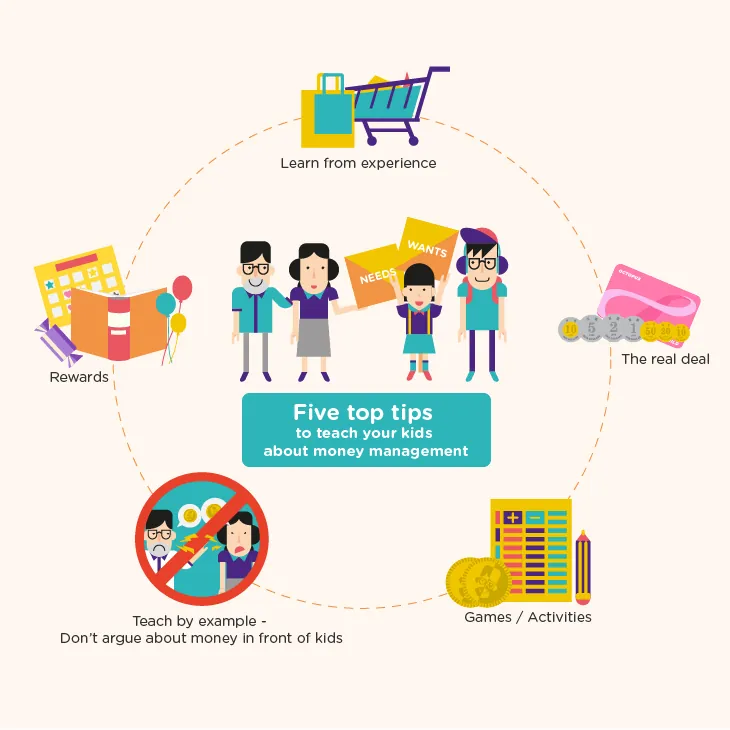
- Take them to the store with their “Spend” jar. Let them choose their own item, but tell them if they don’t have enough money in the jar, they can’t buy it.
- Open a real savings account once they’re old enough to understand the concept of a bank. According to the Consumer Financial Protection Bureau, helping children set specific savings goals helps them build better habits over time.
- Explain the concept of “needs” versus “wants.” Before any purchase, ask them if the item is something they truly need to live or just something they desire for fun.
- Model good habits yourself. Let your children see you comparing prices or choosing to wait for a sale. If you hide your own money habits, they miss the chance to see how an adult makes decisions.
The decision rule is simple: if the child is under 7, use physical cash so they can see the money leave their hand; if they are 8 or older, you can begin using digital tracking apps to show them how numbers move in a bank account.
Financial Milestones and Settings
| Age Range | Primary Goal | Recommended Tool | Focus Area |
|---|---|---|---|
| 4-6 | Basic counting | Physical jars | Recognizing coin value |
| 7-9 | Saving for items | Budget ledger | Delaying gratification |
| 10-12 | Managing budget | Debit card/App | Tracking expenses |
| 13-15 | Earning money | Bank account | Understanding interest |
| 16+ | Financial planning | Investment app | Long-term growth |
This assumes a standard weekly allowance. If your child earns money through extra chores, increase the total by 20% to reflect their added effort.
A common mistake is treating the allowance as a gift rather than a wage. If they miss a chore, deduct the corresponding amount. This teaches that income is tied to output.
Check your local bank’s age requirements for youth accounts, as these vary by institution. Most banks require a parent to be a joint owner until the child turns 18. If your bank charges a monthly maintenance fee, look for a credit union instead. These institutions often waive fees for accounts under $500.
If your child is under 13, rely on paper ledgers to build tactile memory. Once they reach 13, transition to digital apps to monitor real-time spending habits. This shift prepares them for the complexity of adult banking.
Keys to Teaching Kids Money Management
The biggest mistake parents make is bailing their children out when they run out of money. If you provide extra cash every time they spend their allowance too quickly, you destroy the lesson of scarcity. They must feel the temporary disappointment of not having enough to buy what they want. This teaches them that money is a finite resource and that every choice has an opportunity cost.
Teaching children to allocate money for a “Share” jar is also important. Including a charity or a cause in their budget helps children understand that money has power beyond their own consumption. It builds empathy and shows them that they can contribute to their community. When they choose the cause themselves, they’re much more likely to stay engaged with the habit of setting money aside for others.
Common Money Management Problems

| What you notice | What it means | What to do first |
|---|---|---|
| Constant begging | Lack of boundaries | Stick to the allowance |
| Impulsive spending | Poor planning | Require a waiting list |
| Lost allowance | Disorganization | Use a locked box |
| Stealing small amounts | Lack of trust | Increase transparency |
If your child frequently loses their money, don’t simply replenish it. This mistake teaches them that money is an infinite resource rather than a finite tool. Instead, require them to keep their cash in a locked box or a specific drawer. If they lose it again, they must wait until the next scheduled payday to earn more.
When impulsive spending becomes a pattern, implement a mandatory 48-hour waiting period for any non-essential purchase over five dollars. This pause forces the brain to shift from emotional desire to logical evaluation.
If you suspect stealing, distinguish between a child testing boundaries and a genuine lack of impulse control. If the child acts defensively, they’re likely testing boundaries. If they act with shame or confusion, they may lack the executive function to manage their own budget. In that case, reduce their autonomy by moving to a digital ledger where you track their spending together.
Legal and Practical Boundaries
There are no universal laws on how to manage your child’s money, but your local bank or credit union will have specific rules for opening accounts. Most institutions require a parent or legal guardian to be a joint owner on a minor’s account until they reach the age of 18. This is a safety measure to ensure that the funds are managed correctly and that you’re aware of all transactions.
If you choose to give your child a debit card, remember that you’re responsible for any overdrafts or fees incurred. Check the terms of service for any youth-focused banking app you download, as some charge monthly subscription fees. If you aren’t sure about a specific service, call the bank directly to ask about their policy on minor account holders and parental monitoring tools.
Keeping the Lessons Consistent
Once the habit is established, keep the system running until the child leaves for college. You don’t need to change the rules often; consistency is more important than complexity. If your child asks for a raise, use it as a moment to discuss inflation or the value of work. You can transition from a fixed allowance to a system where they earn money for specific, pre-agreed tasks.
To bring the lesson back after a break, simply sit down and review their current savings balance. If they have stopped using their jars or app, ask them what their current goal is and see if they still want to reach it. If they have lost interest, let them take a break for a month. Most children will naturally return to the system once they find something they really want to buy.
When to Use a Different Approach
This method isn’t for children who struggle with severe impulse control or those who don’t yet understand basic math. If your child is younger than four, focus on play-based learning instead of rigid allowance rules.
If your teenager is already working a part-time job, move away from an allowance. Transition them to a system where they manage their own personal expenses like gas, data plans, or entertainment. This shift forces them to weigh the cost of labor against the cost of desire.
Always adjust your expectations to match their maturity level, not just their age. If a child consistently forgets to track their spending for three weeks, revert to a simpler cash-only envelope system. If they handle that well, move to a digital ledger. The mistake parents make is sticking to a broken system; the cost is a missed lesson in financial accountability.
Frequently asked questions
How long does it take for a child to learn?
It takes several years of consistent practice for a child to fully grasp money management. You should expect to see progress in small steps, such as saving for a week to buy a small toy, rather than expecting them to understand long-term budgeting before their teen years.
Is it safe to give my child a debit card?
Yes, it’s safe as long as you choose a card with strict parental controls. Many modern banking apps for kids allow you to set spending limits, block certain stores, and receive real-time notifications on your phone for every purchase they make.
What happens if my child loses their allowance?
If your child loses their money, the best approach is to let them experience the loss. Don’t replace the money, as doing so removes the responsibility they need to learn. Instead, help them look for ways to earn extra money through additional household chores.
How much should I give for an allowance?
The standard is usually $1 per week for every year of a child’s age. If you feel this is too much or too little for your family’s budget, you can adjust the amount, but keep the payment day the same every week to help them plan.
Can I stop the allowance if they misbehave?
No, it’s better to keep the allowance separate from behavior. If you use money as a reward or punishment, you turn a financial lesson into a power struggle. Keep the money as a tool for teaching, and use other methods to manage behavior.
Why should I use physical jars for money?
Physical jars make the abstract concept of money visible and tangible for younger children. When they can see their savings growing or their spending jar emptying, they understand the reality of their choices much faster than they would with digital numbers on a screen.
Conclusion
Building these habits takes patience and time, but your involvement makes the difference. Stay consistent with your rules, keep the lines of communication open, and let your child experience the natural consequences of their financial decisions to ensure they grow into responsible adults.
Related guides