

You build a foundation for social success by using consistent routines and positive reinforcement to teach kids good manners. Children typically grasp basic social expectations between ages 3 and 5, though mastery requires years of patient modeling. This method works best for caregivers who prioritize calm, repetitive instruction over strict discipline.
Teaching kids manners through daily habits
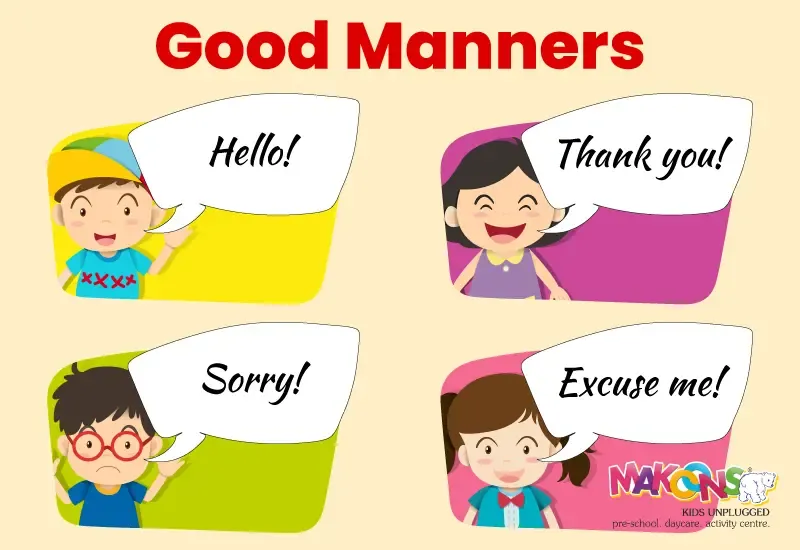
To effectively guide your child, you need a few core items and a consistent mindset. Having these resources ready makes the process smoother for everyone involved.
A family calendar tracks specific goals, like remembering to say “please” at dinner or “thank you” after receiving a gift. Focus on one habit per week. If you try to correct three behaviors at once, you’ll likely overwhelm your child and lose their focus.
Visual reminder cards use simple index cards with pictures showing polite actions, such as covering a mouth when sneezing or waiting to speak. Place these at eye level near the kitchen table or the front door.
A “polite jar” holds a marble or sticker whenever you catch your child using good manners. When the jar fills to the halfway mark, offer a small, non-monetary reward like choosing the evening movie. This creates a tangible sense of progress.
Role-play puppets act out social scenarios, like introducing a friend or sharing a toy, in a low-pressure environment. If your child is shy, let them hold the puppet while you speak for it. This distance lowers their anxiety during difficult social transitions.
Books about kindness feature characters navigating social situations. Select stories where the protagonist faces a social blunder, as this allows your child to analyze the mistake objectively.
The most important tool is your own behavior, as children mimic what they see. If you find yourself snapping at a waiter or interrupting a partner, acknowledge the mistake immediately. Apologizing to your child shows them that manners apply to adults, too.
Avoid using screens or tablets for these lessons, as they lack the interactive feedback needed for real-world social growth. If you’re unsure about developmental expectations, consult your pediatrician to see if your child is hitting their social milestones correctly.
Steps for teaching etiquette
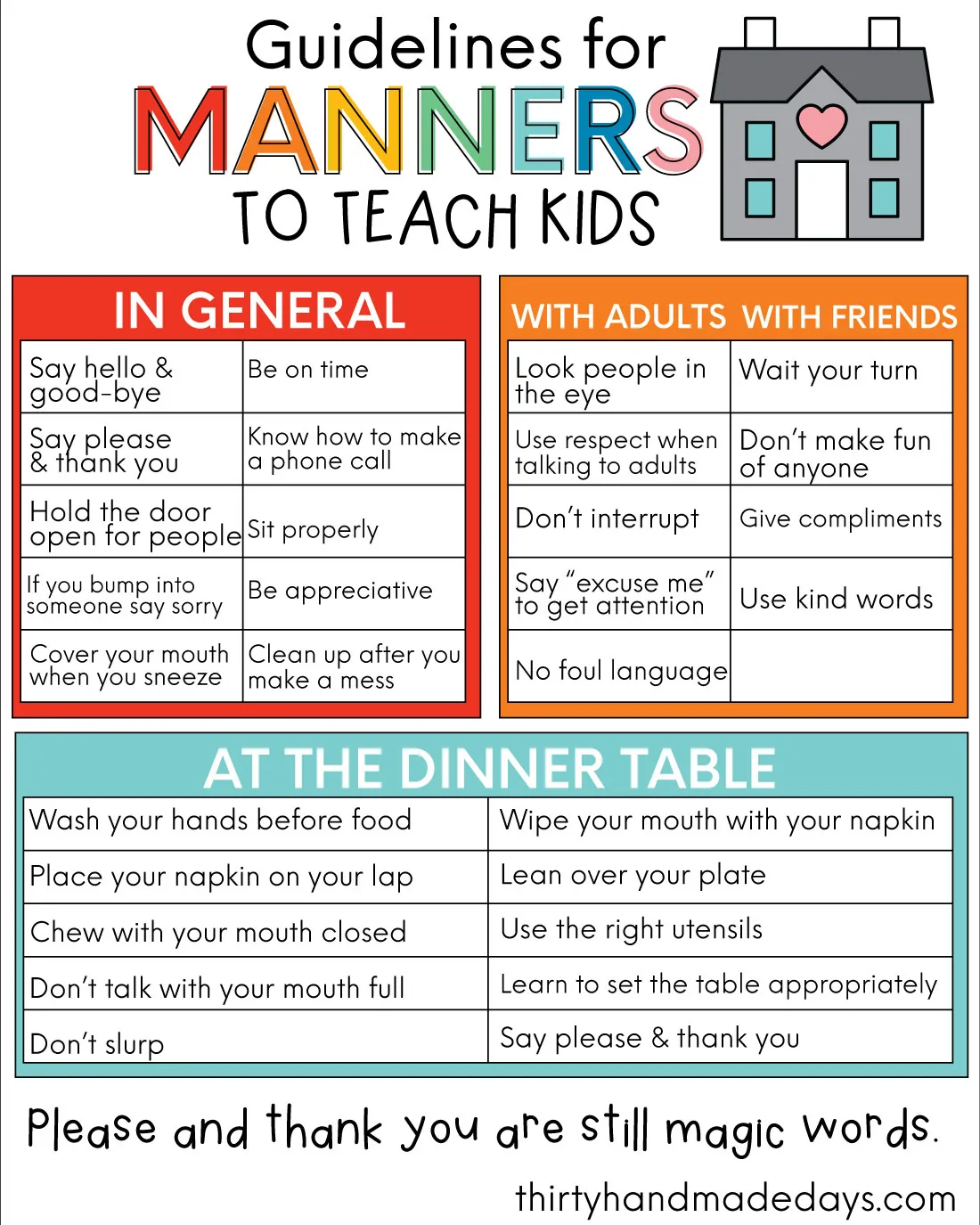
- Model the behavior you want to see by using “please” and “thank you” when speaking to your child and others. Children watch your daily interactions more closely than they listen to your lectures.
- Start with one or two habits at a time, such as saying “please” before asking for a snack or “excuse me” when interrupting. Trying to correct every minor behavior at once often leads to frustration for both you and your child.
- Explain the “why” behind the rule so the child understands the impact on others. For example, tell them that saying “thank you” shows the other person that their kindness was noticed and appreciated.
- Practice through role-play games before heading into a social setting. If you’re going to a birthday party, act out how to say hello to the host and how to wait for a turn to play.
- Provide immediate, specific praise when you notice your child using good manners. Say, “I loved how you waited for your sister to finish talking before you shared your idea.”
- Correct mistakes gently and privately rather than calling them out in front of others. If they forget to say thank you, whisper a quiet reminder or ask, “What do we say to Grandma?”
- Set clear boundaries for unacceptable behavior, such as name-calling or hitting. If a child acts rudely, remove them from the situation calmly and explain that we only return when we can be kind.
Careful: Don’t force a child to apologize if they don’t mean it, as this can lead to resentment. Instead, encourage them to find a way to make amends when they’re ready. Tip: If your child is tired or hungry, they will struggle to follow social rules, so plan your lessons for times when they’re well-rested.
Adjusting your approach by situation
Social requirements change based on where you’re and who is present. Starting small prevents your child from feeling overwhelmed by too many rules at once.
| Situation | Time/Effort | What is different | Watch for |
|---|---|---|---|
| Family dinner | Low | Familiar faces | Interrupting others |
| Public parks | Medium | Many distractions | Sharing equipment |
| Grocery store | High | Many strangers | Public outbursts |
| Formal events | Very high | Strict expectations | Sitting still |
It’s always safer to start with simple habits at home and slowly add more complex rules as your child matures. Overshooting your expectations on the first try usually results in a power struggle rather than a polite child.
If you’re at a family dinner, focus on one specific skill like using a napkin. If you’re in a public space, prioritize safety over manners. A child who can sit quietly at home might still struggle in a grocery store because of the sensory input.
The mistake most parents make is enforcing “home rules” in high-stress environments. This costs you your patience and creates a negative association with outings.
Use this decision rule: If the environment is novel, reduce your expectations by half. If the environment is routine, increase your expectations by one level. You’ll know you have reached the right balance when your child can follow your instructions without needing a reminder every thirty seconds. If they fail three times in a row, lower the bar immediately. It’s better to succeed at a small task than to fail at a large one.
Signs of progress
A good result is when your child begins to use manners automatically, without you needing to prompt them every single time. This shift usually occurs between the ages of four and six. You’ll notice them offering a polite phrase during a moment of genuine excitement, rather than just during a formal greeting.
A poor result occurs when a child uses manners only to get a reward or out of fear of punishment. This happens because the child hasn’t internalized the value of empathy. To prevent this, focus on how their kindness makes others feel happy or included by asking about their friend’s reaction.
Watch for the child who says “thank you” even when you aren’t looking. This shows they’re beginning to value the social connection itself. If they stop using manners, it’s often a sign they’re stressed or overstimulated. When this happens, go back to modeling the behavior yourself and reduce the number of rules you’re enforcing until they feel more settled.
If your child is under three, don’t mistake their lack of manners for defiance. They’re still learning the mechanics of language. If they’re over seven and still require constant prompting, stop rewarding them for compliance. Instead, initiate a conversation about why they find the social interaction difficult.
Consistent rules and follow-up
The standard for success is consistency, according to the principles of positive discipline. You must maintain the same expectations regardless of where you’re or who is watching.
Consistency fails when parents apply rules based on their own mood rather than the child’s behavior. If you enforce a rule only when you’re tired or stressed, your child learns to gamble on whether you’ll notice their actions. This inconsistency teaches them to push boundaries until they find your breaking point.
After a social event, take five minutes to talk about what went well and what felt difficult. Focus on specific moments rather than vague praise. Did they share a toy or wait for their turn?
Record these wins in a notebook or on a calendar to show your child how much they have improved over time. Visual evidence of progress builds confidence.
If your child struggles with severe behavioral issues or social anxiety, speak with a school counselor or a child psychologist who can offer specialized support.
Alternatives to direct instruction
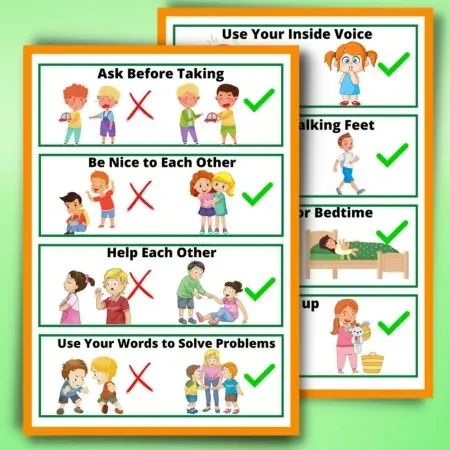
Practicing through play
Use pretend scenarios to let your child lead the interaction. This lowers their anxiety and lets them test different social responses in a safe environment. The time spent is low, but the emotional gain is high, as it builds confidence.
Reading and discussing stories
Choose books that highlight characters making social mistakes and learning from them. Ask your child what the character could have done differently. This helps them analyze social dynamics without feeling personally criticized for their own behavior.
Observing others
Point out when you see other people using good manners in public. Ask your child, “Did you see how that person held the door open? That was very kind.” This helps them notice the positive impact of manners in the real world.
Frequently asked questions
How can I stop my child from interrupting?
You can teach them to place a hand on your arm when they need your attention. This physical signal allows you to acknowledge them without stopping your conversation. Remind them that you’ll turn to them as soon as you finish your current sentence.
Is it safe to force manners on a shy child?
No, forcing a shy child to speak to strangers can increase their anxiety. Instead, allow them to wave or nod as a starting point until they feel comfortable using their words.
What happens if my child is rude in public?
You should remove them from the immediate area to a quiet spot to talk privately. Keep your voice calm and explain that the behavior was hurtful, then return to the activity once they feel ready to try again.
How long does it take for manners to stick?
It typically takes several months of consistent daily practice before these habits become natural. You’ll see small improvements week by week, but mastery is a gradual process that continues throughout their childhood.
How do I handle a child who refuses to say please?
You can wait calmly for them to use the word before fulfilling the request. Simply state that you’re waiting to hear the magic word, maintaining a patient and neutral tone until they comply. This approach reinforces the expectation of politeness without escalating the situation into a conflict.
Conclusion
Your child’s journey toward kindness doesn’t happen overnight, but your steady encouragement makes all the difference. Keep showing them how to treat others with respect through your own daily actions. It’s a slow process, so don’t worry if they stumble. You’ll be proud to see these thoughtful habits blossom as they grow.